
-
+86-18624058113
icric_conference@163.com
-
Milan, Italy
February 17-19, 2027
-
10:00 - 18:00 (GMT+8)
Monday to Friday
+86-18624058113
icric_conference@163.com
Milan, Italy
February 17-19, 2027
10:00 - 18:00 (GMT+8)
Monday to Friday

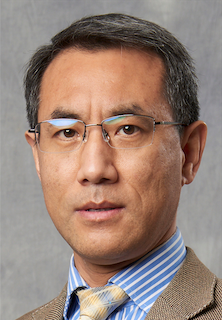
Prof. Hui Yu
Member of European Academy of Sciences and Arts
University of Glasgow, UK
Biography: Hui Yu is a Professor with the University of Glasgow, UK. He leads the Visual Computing and Social Robotics Group at the university. His research interests lie in cognitive computing and computational vision as well as machine learning with applications to social signal analysis, social robotics, human-machine interaction and image analysis. Professor Yu’s research work has led to several awards and successful collaboration with worldwide institutions and industries. He is the Associate Vice President of IEEE Systems, Man, and Cybernetics Society and a Scientific Advisor for a high-tech company in the UK. Prof. Yu is the PI on grants from a diverse range of funding sources including the EPSRC, EU FP7, RAEng, Royal Society, Innovate UK and Industry. He is a member of European Academy of Sciences and Arts. He has been awarded Industrial Fellowship by the Royal Academy of Engineering. He serves as an Associate Editor for IEEE Transactions on Human-Machine Systems, IEEE Transactions on Computational Social Systems, and IEEE Transactions on Intelligent Vehicles.
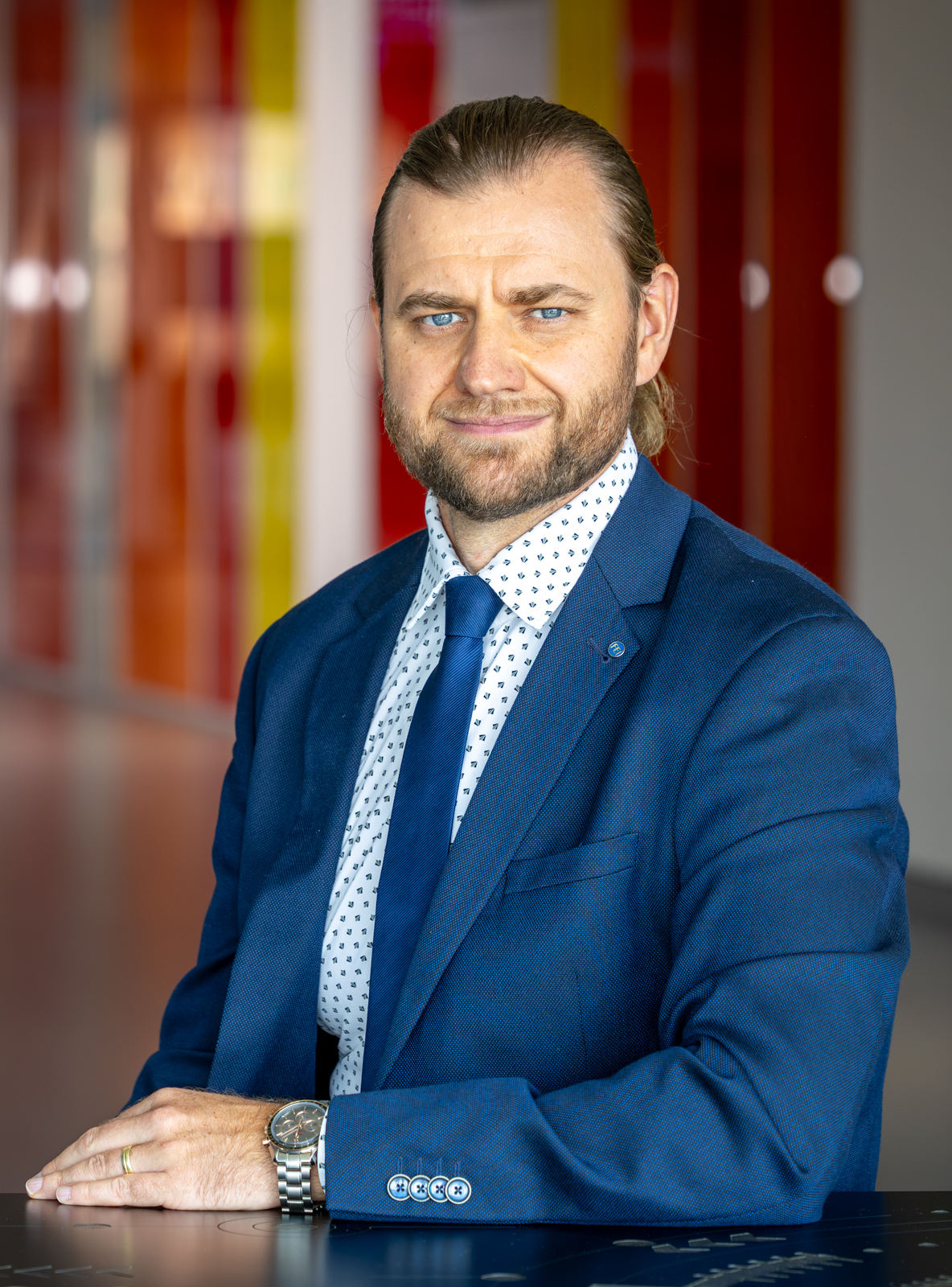
Prof. Radek Martinek
Dean FEECS, Head of Signal Lab
Technical University of Ostrava, Czech Republic
Speech Title: Intelligence Starts with the Signal: Reliable AI for Robotics and Industry
Abstract: How intelligent can a machine be if it cannot reliably sense the world? This keynote puts sensing and signal quality at the center of the discussion on artificial intelligence in robotics and industrial control. Its central argument is simple: even the most sophisticated AI model cannot substitute for informative measurements, representative data, and carefully designed preprocessing.
Drawing on applied research at Signal Lab, VSB – Technical University of Ostrava, the lecture follows the path from raw sensor data to AI-supported interpretation and decision-making. It explores the roles of signal acquisition, filtering, synchronization, annotation, and feature extraction, with particular emphasis on combining acoustic, vibration, and image data. Rather than treating preprocessing as a routine preliminary step, the talk positions it as a critical engineering task: suppressing interference while preserving the information that matters.
Industrial case studies include acoustic testing of automotive seat structures in collaboration with Brose and AI-assisted road-surface defect detection with FUTTEC. These examples connect sensing and signal processing with practical challenges in quality inspection, condition monitoring, and computer vision, providing a basis for discussing reliable perception in robotic and industrial systems. FEI VŠB-TUO
Beyond the opportunities, the keynote will critically examine the risks of overreliance on AI—from false detections and overconfident predictions to hallucinations in generative systems. The discussion will emphasize validation against physical measurements, engineering expertise, and the distinction between a plausible output and a verified result. High-quality data will be presented as the starting point for trustworthy AI, not a guarantee of it.
The take-home message is clear: building more intelligent machines starts with engineering how they sense the world—not simply increasing model complexity.
Biography: Prof. Radek Martinek is a Professor of Cybernetics and Dean of the Faculty of Electrical Engineering and Computer Science at VSB – Technical University of Ostrava, Czech Republic. He is the Head of Signal Lab, serves as the University Coordinator for Space Research, and is an IEEE Senior Member.
His research focuses on advanced signal processing, artificial intelligence, sensors, and measurement systems. His main application areas include biomedical monitoring, industrial diagnostics, condition monitoring, predictive maintenance, and space technologies. He connects the development of new methods with their experimental validation and practical use in industry and healthcare.
He has authored or coauthored more than 400 scientific publications. His Web of Science citation report records 371 indexed publications, 4,904 citations, and an h-index of 35, including 4,057 citations excluding self-citations.
Three of his publications are designated as Highly Cited Papers in Web of Science. This designation places them among the top 1% most cited papers in their respective research fields and publication years, according to Clarivate’s Essential Science Indicators. He has also repeatedly been included in the World’s Top 2% Scientists list associated with Stanford University.
As a principal investigator, co-investigator, and research team member, he has contributed to dozens of national and international research projects. Under his leadership, Signal Lab combines publicly funded research with industrial cooperation (including ESA projects, projects under the EU Horizon programs, and contract research). He is the principal investigator of CONREX, a project preparing a nanorobotics experiment for the International Space Station.
He is a co-inventor of more than ten patents. His applied research has also produced licensed software, prototypes, utility models, and technologies used by industrial and clinical partners. He maintains international collaborations with universities, research institutions, and companies across Europe, the United States, and Asia, and supervises doctoral students and early-career researchers.
Prof. Martinek serves as Vice-Chair of Panel P102, Electrical and Electronic Engineering, of the Czech Science Foundation. He is also a member of the Research Council of the Technology Agency of the Czech Republic (TA CR). He serves as Vice-Chair of the Czech Society for Artificial Intelligence and Innovative Digital Technologies in Medicine.
In 2026, he received the ISCM Prize 2025 from the International Society for Condition Monitoring for his contributions to research and development in condition monitoring. He also joined the society’s Management Committee.
More speakers will be announced soon...