
-
+86-18624058113
icric_conference@163.com
-
Milan, Italy
February 17-19, 2027
-
10:00 - 18:00 (GMT+8)
Monday to Friday
+86-18624058113
icric_conference@163.com
Milan, Italy
February 17-19, 2027
10:00 - 18:00 (GMT+8)
Monday to Friday

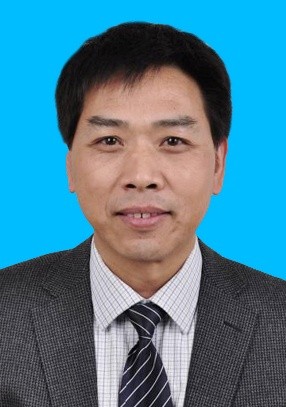
Prof. Junsuo Qu, Xi'an University of Posts and Telecommunications, China
Biography: Junsuo Qu (Member, IEEE) received his B.S. in Telecommunication Engineering from Chongqing Institute of Posts & Telecommunications in 1991 and his M.S. in Communication and Information Systems from Xidian University in 1998. He is a Full Professor at the School of Automation, School of Artificial Intelligence, Xi’an University of Posts & Telecommunications. His research interests include video behavior understanding, embodied intelligent robots and Internet of Things. He is Director of the Xi’an Key Laboratory of Advanced Control and Intelligent Process at XUPT.
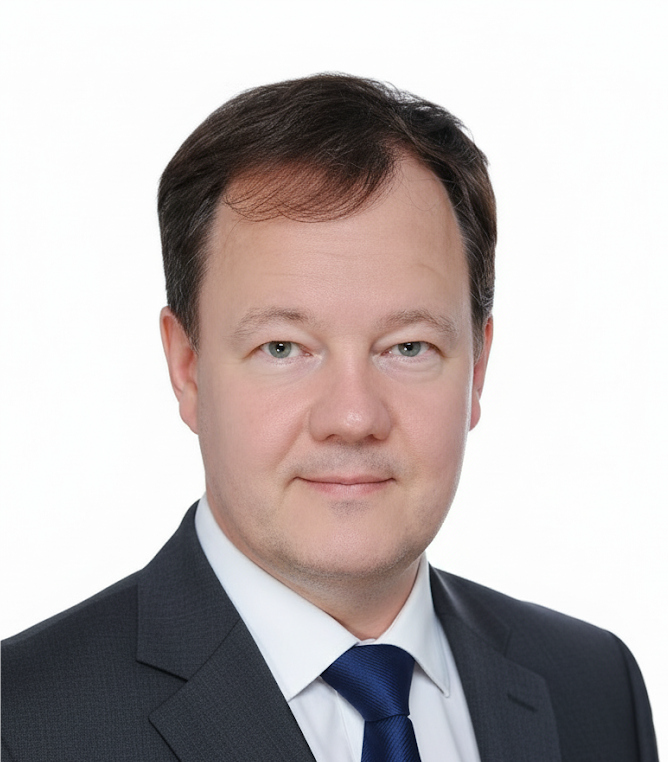
Assoc. Prof. Pavel Loskot, ZJU-UIUC Institute, China
Speech Title: Distributed Consensus: A Signal
Processing Perspective
Abstract: Distributed consensus problem
is about agreeing a set of values among multiple actors that minimize a
certain distributed function. This is useful in practical distributed
optimization and estimation tasks. The specific formulation of
distributed consensus can adopt different constraints and assumptions,
which have different properties and solutions. For instance, one class
of these problems is known as graph signal processing. In this talk, I
will outline several formulations of the gradient-based joint
minimization of a distributed function, and its convergence properties.
Such a signal processing perspective needs to be contrasted with the
consensus problems considered in computer engineering, which aim at
agreeing a set of values under delayed and lost messages rather than
minimizing distributed functions.
Biography: Pavel Loskot joined
the ZJU-UIUC Institute in January 2021 as an Associate Professor after
being 14 years with Swansea University in the UK. He received his PhD
degree in Wireless Communications from the University of Alberta in
Canada, and the MSc and BSc degrees in Radioelectronics and Biomedical
Electronics, respectively, from the Czech Technical University of
Prague in the Czech Republic. In the past 30 years, he was involved in
numerous collaborative research and development projects, and also held
a number of paid consultancy contracts with industry. He is Senior
Member of the IEEE, Member of the ACM and APSIPA, Fellow of the Higher
Education Academy in the UK, Recognized Research Supervisor of the UK
Council for Graduate Education, and the IARIA 2025 Fellow. His current
research interests focus on mathematical and probabilistic modeling,
statistical signal processing and machine learning for multi-sensor and
longitudinal data.
Assoc. Prof. Mohd Ashraf Ahmad, University Malaysia Pahang, Malaysia
Biography: Mohd Ashraf Ahmad received his B.Eng. in Electrical Mechatronics and M.Eng. in Mechatronics and Automatic Control from the University of Technology Malaysia (UTM) in 2006 and 2008, respectively. In 2015, he earned his Ph.D. in Informatics (Systems Science) from Kyoto University, Japan. He is currently an Associate Professor at the Faculty of Electrical and Electronics Engineering Technology, Universiti Malaysia Pahang Al-Sultan Abdullah (UMPSA). His current research interests include model-free control, control of mechatronic systems, nonlinear system identification, and vibration control. He serves as an Associate Editor for Applications of Modelling and Simulation, International Journal of Power Electronics and Drive Systems, International Journal of Robotics and Automation, Scientific Journal of Engineering Research, and International Journal of Industrial Engineering. He has been listed among the top 2% of Stanford University’s world’s top scientists in 2022, 2023, 2024, and 2025, and world's top 5% scientist of Scirank Global Registry in 2025.
Asst. Prof. Shubhobrata Rudra, NIT Rourkela, India
Biography: Shubhobrata Rudra received his PhD in Electrical Engineering from Jadavpur University, India. Dr. Rudra is currently an Assistant Professor in the Department of Electrical Engineering at NIT Rourkela. His primary research interests encompass the theoretical control of stochastic differential equations and their applications in low-inertia grids, power electronic device size reduction, and robotics. Furthermore, Dr. Rudra is keenly interested in exploring differential geometric tools and their applications to electrical and mechanical systems, particularly those exhibiting time-scale separation. Dr. Rudra currently serves as an investigator for the prestigious ANRF-PAIR project. He is the founder of the "Intelligent Geometric Grid Control" Laboratory. Dr. Rudra is a Senior Member of the IEEE Control Systems Society (CSS).
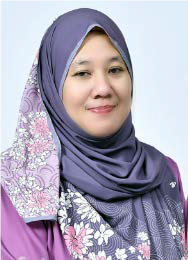
Senior Lecturer Siti Nurulain Mohd Rum, Universiti Putra Malaysia (UPM), Malaysia
Biography: Dr. Siti Nurulain Mohd Rum received the Diploma in Computer Science from Universiti Teknologi MARA (UiTM), Malaysia, in 2001, the Bachelor of Computer Science degree from Universiti Teknologi Malaysia (UTM), Malaysia, in 2005, and the M.Sc. (2012) and Ph.D. (2016) degrees in Computer Science from the University of Malaya, Malaysia. She began her career as a Programmer at the International Islamic University Malaysia (IIUM) before serving as a Senior Information Technology Officer at Universiti Teknologi MARA (UiTM). She is currently a Senior Lecturer with the Faculty of Computer Science and Information Technology, Universiti Putra Malaysia (UPM). Her research interests include data science, artificial intelligence, big data analytics, database systems, and educational technologies, with applications in healthcare, social media analytics, sustainability, and intelligent decision support systems. She has led and participated in several nationally funded research projects and has published in high-impact international journals and conference proceedings.

Lecturer Qian Shi, Shanghai University, China
Speech Title: A reinforcement learning control method for path tracking of connected autonomous vehicles with robust $H_\infty$ performance guarantees
Abstract: This research presents a reinforcement learning (RL) control method assisted by robust control for vehicle path following on curved roads under time-varying velocity, signal processing, and transmission delays in connected autonomous vehicles (CAVs). Conventional robust control is overly conservative and degrades control performance, whereas pure RL suffers from poor generalization in unseen scenarios and under external disturbances. To address these issues, we integrate RL with a robust linear parameter-varying (LPV) control method for time-delay systems, resulting in an efficient and safety-guaranteed path-following approach. First, a bicycle-model-based dynamic model is established, incorporating time-varying velocity, measurement noise, and signal transmission/processing delays in CAVs. Next, a robust LPV controller is designed to ensure the stability and robustness of the delayed system, where the RL input compensation is treated as a bounded disturbance. The integration of the two control inputs is achieved through a norm comparison of the RL input compensation with a designed norm bound. In this way, the robust controller's output is appropriately modified to reduce conservatism, while the RL controller is adjusted for improved generalization performance. Co-simulations using CarSim and PyCharm validate the high-precision path following and robust performance of the proposed method under conditions with varying velocity, perception delays, noises, and varying curvatures.
Biography: Qian Shi is a Lecturer in the Department of Mechatronic Engineering and Automation at Shanghai University and was a postdoctoral researcher at Politecnico di Milano from 2024 to 2025. She received her B.Eng. in Transportation Engineering and her M.Eng. and Ph.D. in Automotive Engineering from Beihang University. Her research focuses on vehicle dynamics, control and optimization methods, and machine learning. Her publications cover autonomous-vehicle path-following control, stochastic delays, actuator constraints, fault diagnosis, lane-change intention prediction, tire modeling, and scenario-based model predictive control. She has published extensively in leading journals such as IEEE Transactions on Industrial Electronics, IEEE Transactions on Intelligent Transportation Systems, and Transportation Research Part C, with one paper recognized as an ESI Highly Cited Paper.