
-
+86-18624058113
icric_conference@163.com
-
Milan, Italy
February 17-19, 2027
-
10:00 - 18:00 (GMT+8)
Monday to Friday
+86-18624058113
icric_conference@163.com
Milan, Italy
February 17-19, 2027
10:00 - 18:00 (GMT+8)
Monday to Friday

This special track explores artificial intelligence, machine learning, data-driven optimization, and intelligent control for sustainable energy systems and electric-vehicle (EV) charging. It aims to bring together researchers working on renewable-energy integration, green hydrogen production, power electronics, and smart charging infrastructure. Topics include AI-based modeling and control of proton-exchange-membrane (PEM) electrolyzers; forecasting and optimization of renewable power; energy management for hybrid PV–hydrogen–battery systems; intelligent EV charging and smart-grid integration; predictive control of power converters; digital twins; fault diagnosis and predictive maintenance; and real-time implementation of control algorithms using FPGA and DSP platforms. Contributions on experimental validation, hardware-in-the-loop testing, optimization methods, and data-driven energy management are also welcome. The track seeks to encourage interdisciplinary discussion and practical solutions that improve the efficiency, reliability, flexibility, and sustainability of hydrogen-based energy systems and intelligent EV charging networks.
Submission Link: https://www.zmeeting.org/submission/ICRIC2027
Session Organizer
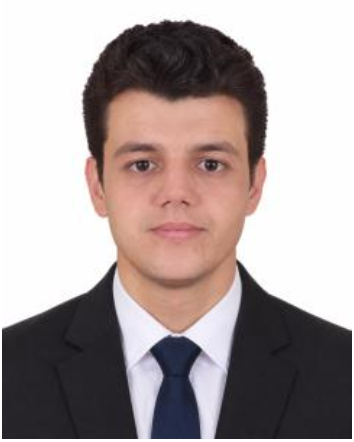
Lecturer Youness Hakam, EMSI Casablanca – LPRI Laboratory, Morocco
Email: y.hakam@emsi.ma
Research Areas: Photovoltaic systems, green hydrogen production, PEM electrolysis, renewable-energy integration, MPPT algorithms, power electronics, EV charging, energy management, intelligent control, digital twins, and FPGA/DSP-based hardware-in-the-loop validation.
Biography: Youness Hakam is a Lecturer in Electrical Engineering and Industrial Computing at EMSI Casablanca and a researcher at the LPRI Laboratory, Morocco. His research focuses on photovoltaic systems, renewable-energy integration, green hydrogen production, PEM electrolyzers, power electronics, intelligent energy management, electric-vehicle charging, and real-time control using FPGA and DSP platforms. His technical work includes PV–hydrogen system modeling, MPPT algorithm development, converter control, and hardware-in-the-loop and FPGA-in-the-loop validation. He has served as a Session Chair at two international conferences in 2026: the International Conference on Energy Futures (ICEF’26) in Ifrane, Morocco, and the International Conference on ICCT in Khouribga, Morocco Selected relevant publications include: “Design and FPGA-in-the-Loop validation of an adaptive current-controlled photovoltaic-PEM hydrogen production platform (journal Next Energy)“Design and simulation of a 5 kW solar-powered hybrid electric vehicle charging station with an ANN–Kalman filter MPPT and MPC-based inverter control for reduced THD” (Scientific African, 2025); “Optimizing charging battery efficiency in partially shaded PV systems with enhanced particle swarm optimization using dual-core DSP microcontroller in EV applications” (Science Progress, 2025); and “Enhancing Electric Vehicle Charger Performance with Synchronous Boost and Model Predictive Control for Vehicle-to-Grid Integration” (Energies, 2024). He has 46 publications, 291 citations, and an h-index of 11 on Google Scholar.
Session Co-Organizer
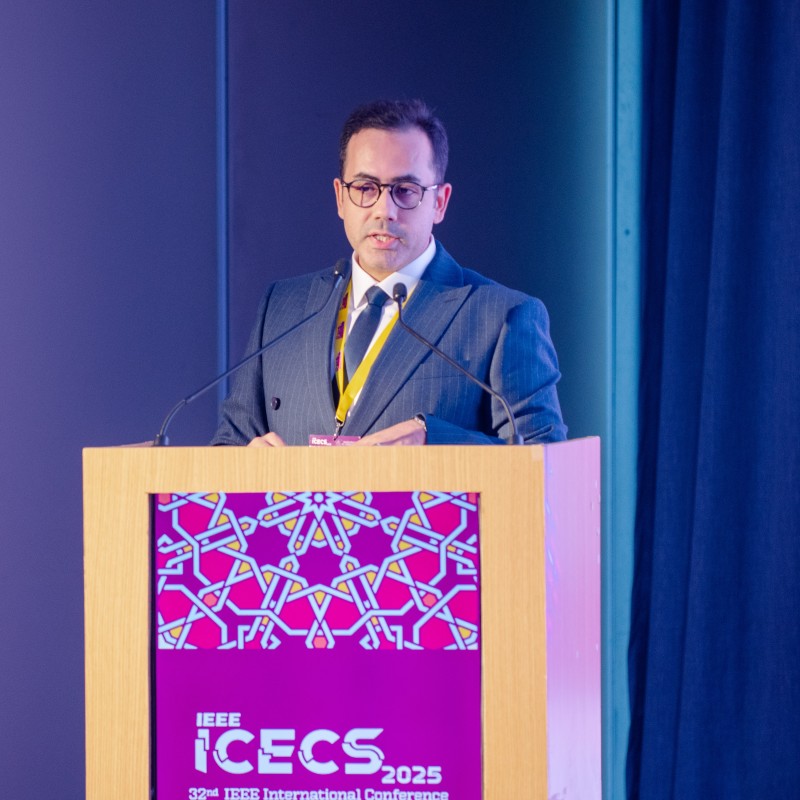
Prof. Mohamed Tabaa, EMSI Casablanca – LPRI Laboratory, Morocco
Email: m.tabaa@emsi.ma
Research Areas: Embedded systems, digital signal processing, wireless communications, energy systems, artificial intelligence, and intelligent computational methods.
Biography: Prof. Mohamed Tabaa is the Director of Research and Development at EMSI Casablanca and the Director and founder of the LPRI (Laboratoire Pluridisciplinaire de Recherche et Innovation) Laboratory, established in 2015. He received an engineering degree in telecommunications and networking from EMSI Casablanca, a master’s degree in radiocommunications and embedded electronic systems from the University of Paul Verlaine, Metz, France, and a PhD and Habilitation à Diriger des Recherches (HDR) in electronic systems from the University of Lorraine, France. His research interests include digital signal processing, wireless communications, embedded systems, energy systems, and artificial intelligence. He has served on the organizing and technical program committees of several international conferences, including IEEE ICM, IEEE REPS&GIE, IEEE SysToL, TMREES, INTIS, and related events. He has also contributed to editorial activities for special issues in journals covering electronics, communications, sustainability, and energy.
Selected publications relevant to the proposed track include work on FPGA-based intelligent hybrid energy management systems, renewable-energy and smart-grid applications, and joint research with Youness Hakam on photovoltaic conversion, vehicle-to-grid integration, and hydrogen production. These areas connect his expertise in embedded and intelligent systems with the proposed session's focus on data-driven energy management, hydrogen technologies, and smart EV charging.